A Northern Pakistan tour with Holidays GB Tours takes travelers through the regions of Naran, Hunza, Gilgit, and Skardu — across landscapes shaped by three of the world’s greatest mountain ranges, the Karakoram, the Himalaya, and the Hindu Kush. This 10-day journey moves from the green hillsides of Kaghan Valley to the fruit orchards of Hunza and the cold desert plains of Skardu, giving guests a complete picture of what makes the Northern Areas of Pakistan one of the most rewarding regions on earth to travel through.
At Holidays GB Tours, we have spent more than 10 years introducing travelers to these mountains. Our team has guided families, honeymoon couples, photographers, trekking groups, documentary film crews, researchers, and adventure travelers across Hunza, Skardu, Astore, Gahkuch, Fairy Meadows, Deosai, and many other destinations. Every itinerary we create is based on local knowledge, seasonal conditions, and years of practical experience rather than a fixed schedule.
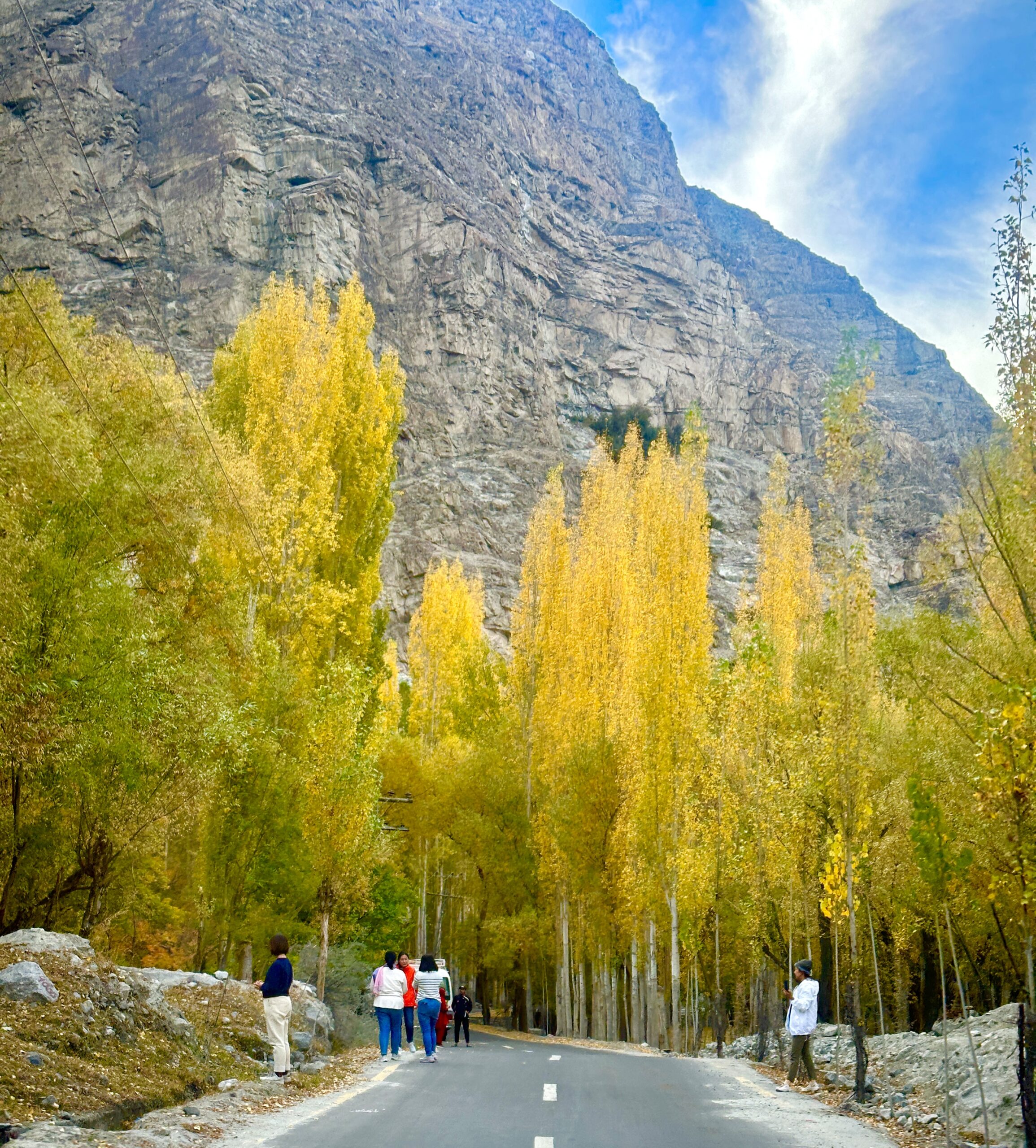
Our tours are available throughout the year because every season brings a different side of Northern Pakistan. Spring transforms Hunza and Nagar into valleys filled with cherry, apricot, and apple blossoms. Summer is the busiest season for sightseeing, family holidays, and trekking. Autumn colors turn entire mountainsides into shades of gold and crimson, making it one of the favorite seasons for photographers. Winter offers peaceful snow-covered landscapes, frozen lakes, and a completely different mountain experience.
This Northern Pakistan travel guide has been prepared to help you plan your journey with confidence. You’ll discover the best places to visit in Northern Pakistan, the most famous tourist attractions in Northern Pakistan, practical travel advice, seasonal recommendations, and the beautiful places in Northern Pakistan that make this region one of Asia’s finest travel destinations.
Best Places to Visit in Northern Pakistan on This Route
Three valleys anchor this journey, and each brings something the others simply do not have.
Naran and Kaghan Valley mark the first stop, sitting close enough to Islamabad for an easy first day on the road. Just outside Naran, a short jeep ride leads to the stunning Saif-ul-Malook Lake, where crystal clear glacial waters reflect the towering peak of Malika Parbat, offering a memorable introduction to the region’s mountain scenery.
Hunza Valley follows along the Karakoram Highway, past the Rakaposhi viewpoint and into terraced fields, centuries old forts and a slower pace of life that many guests remember as the heart of the trip.
Skardu Valley closes the route with a landscape unlike anything before it: cold desert dunes running alongside the Indus River, mountain peaks rising directly behind them, and the Deosai plateau sitting just a day trip away.
Together, these three stops cover the range of scenery that defines the best places to visit in Northern Pakistan, from alpine lakes to fortified villages to high desert plains.
Top Tourist Attractions Along the Journey
Within these valleys, certain stops function as the backbone of nearly every Northern Pakistan itinerary we run:
- Rakaposhi View Point – a roadside stop along the KKH with an unobstructed view of Rakaposhi’s 7,788-meter summit.
- Baltit Fort – the ancestral seat of Hunza’s former rulers, now restored and open as a heritage museum.
- Attabad Lake – boating and lakeside photography against a backdrop of bare mountain cliffs.
- Khunjerab Pass – bordering China at over 4,700 meters, with wide open high-altitude scenery and occasional sightings of Marco Polo sheep.
- Kharpocho Fort, Skardu – built in the 16th century, overlooking the Indus River and Skardu town.
- Upper Kachura Lake and Shangrila Resort – calm lake views set against the Karakoram, one of Skardu’s most photographed spots.
- Deosai National Park – the “Land of Giants,” with Sheosar Lake and wildflower meadows stretching across the plateau.
Northern Areas of Pakistan You Should Explore
Beyond this 10-day route, our team also arranges extensions and custom add-ons into other parts of the Northern Areas of Pakistan for travelers who want to go further:
- Astore Valley – gateway to Nanga Parbat’s Rupal Face and the Rama Meadows
- Gahkuch – a quieter town in Ghizer district, often used as a base for exploring Phander and Yasin Valley
- Nagar Valley – bordering Hunza, home to the Hopper Glacier, and considerably less crowded
- Shigar Valley – near Skardu, home to Shigar Fort and the Sarfaranga Cold Desert
- Chitral and Kalash Valley – for travelers extending their trip toward the Hindu Kush and the Kalash communities
Guests interested in any of these regions should mention it while booking, since our team can build them into the itinerary as extra days rather than a separate trip.
Why Visit Northern Pakistan?
Few mountain destinations in the world offer what Northern Pakistan brings together in a single trip: one of the highest international highways on earth, glacial lakes, centuries-old forts, high-altitude border passes, and traditions that have stayed largely unchanged for generations. The travel itself becomes part of the experience, with pine forests and rivers on the way to Naran, cliffs and glaciers along the Karakoram Highway, and then the wide open valleys of Hunza before the road splits toward Khunjerab Pass or south to the lakes and deserts of Skardu.
What keeps travelers coming back is the range of experiences packed into the Northern Areas of Pakistan. Families gravitate toward peaceful lakes and comfortable resorts. Couples choose Hunza and Skardu for quieter honeymoon settings. Adventure travelers head for Fairy Meadows, Deosai, and the trekking routes into the Karakoram. Meanwhile, photographers time their visits around blossom season or autumn color, when the landscape changes within a matter of weeks.
Culture adds a layer that lasts beyond the photographs. Each valley carries its own language, architecture, and food, and moments like walking through Karimabad Bazaar or sharing tea in a mountain village often stay with guests as long as the scenery does. Tourism infrastructure has also improved steadily over the years, with better roads, stronger hotels, and experienced local guides making the region more accessible for families, couples, and senior travelers alike.
At Holidays GB Tours, we believe a trip here should go beyond famous viewpoints. Our team handles the practical side, from airport pickup to final departure, so guests can focus on the culture, hospitality, and landscapes that make this region worth returning to.
Northern Pakistan Travel Guide (Best Time, Transport, Budget)
Best time to visit: Gilgit-Baltistan has something to offer in every season. Spring, from late March to May, brings cherry blossoms across Hunza and Skardu. Summer, from June to September, is best for families and general sightseeing, and is when most of our guests choose to travel for trekking and full valley access. Autumn, October to November, brings the region’s famous fall colors, while winter, December to February, is ideal for snow lovers and winter sports.
Transport: All ground transport on this tour is arranged in comfortable, private vehicles with experienced local drivers who know these roads well, including the mountain stretches around Khunjerab and the KKH switchbacks near Chilas. The Skardu-Islamabad flight segment offers dramatic aerial views but depends on clear weather, which is why our team always builds contingency into the schedule.
Budget: Costs vary by season, group size, and comfort level. Rough starting points from current market rates:
What our team takes care of: Every trip includes visa guidance, immigration support, and airport pick-up and drop-off, so guests can arrive and depart without managing logistics on their own. For areas requiring special clearance, such as certain zones near Khunjerab or Shimshal, our team arranges the required NOCs in advance. Accommodation, transport, and daily routing are handled end-to-end, keeping the journey comfortable and secure from the first day to the last.
Beautiful Places in Northern Pakistan for Nature Lovers
For travelers drawn more to scenery than to landmarks, this route passes through some of the most beautiful places in Northern Pakistan:
- Saif-ul-Malook Lake – a glacial lake framed by Malika Parbat, reached by jeep from Naran
- Attabad Lake – deep turquoise water set against bare rock cliffs
- Passu Cones – sharp, cathedral-like peaks rising above the Hunza River
- Sheosar Lake, Deosai – a high-altitude lake surrounded by summer wildflower meadows
- Upper Kachura Lake – calm water framed by the Karakoram, a short drive from Skardu town
Frequently Asked Questions
Is Northern Pakistan safe for tourists?
Yes, the region is considered safe for both domestic and international travelers, with tourist police stationed in major towns including Gilgit, Hunza, and Skardu. Our team monitors road and weather conditions closely and adjusts the itinerary when needed for guest safety.
What is the best time of year for this tour?
Summer, from June to September, is the most popular season for this exact itinerary, since all mountain roads and passes stay open and the weather remains stable for both driving and the Skardu flight.
How many days should I plan for a Northern Pakistan trip?
This itinerary runs ten days and covers Naran, Hunza, and Skardu at a comfortable pace. Guests wanting to add Astore, Gahkuch, or Chitral should plan for three to five additional days.
Do I need special permits for this trip?
Most of the route is open without special permits. For sections requiring clearance near border-adjacent zones, our team handles the NOC paperwork on your behalf ahead of the trip.
What if my flight to Skardu is delayed or canceled?
Skardu flights are weather-dependent and can shift on short notice. Our team recommends a buffer day before any onward international travel, and we adjust ground transport as a backup option when flights are affected.
Is this trip suitable for families?
Yes, this route is graded as moderate and works well for families, couples, and small groups. Guests traveling with children or older family members can request a slower pace with additional rest stops.
What is included in the tour price?
Accommodation, private transport, guided sightseeing, visa and immigration assistance, and airport pick-up and drop-off are included. Guests should confirm meal inclusions and any required NOC arrangements at the time of booking.
Plan Your Northern Pakistan Journey with Holidays GB Tours
With more than 10 years of experience and over 2,000 happy travelers, Holidays GB Tours is here to make your trip comfortable, safe, and memorable. From visa guidance, airport pickup, and NOC assistance to carefully planned itineraries, experienced local guides, comfortable transport, and handpicked hotels, we take care of every detail so you can simply enjoy the journey. Whether you’re planning a family holiday, honeymoon, trekking adventure, or photography tour, our local team is ready to help you experience the very best of Northern Pakistan. Contact us today and let’s start planning your next mountain adventure.
Tour Highlights
- Drive through Kaghan Valley and visit Saif-ul-Malook Lake, one of the most photographed alpine lakes in Pakistan.
- Travel the legendary Karakoram Highway, following the old Silk Route through some of the highest mountain terrain on the planet.
- Explore Baltit Fort and Altit Fort, UNESCO-recognized structures in Karimabad, Hunza, each over 700 years old.
- Ride a boat across the turquoise waters of Attabad Lake, formed after the 2010 landslide.
- Stand at Khunjerab Pass, the highest paved border crossing in the world, on the frontier between Pakistan and China.
- See Passu Cones and the Passu Glacier viewpoint, among the most recognizable peaks in Hunza.
- Explore Skardu, including Kharpocho Fort and the Shangrila Resort at Lower Kachura Lake
- Spend a full day on the Deosai Plains, home to the Himalayan brown bear and one of the highest plateaus on earth.
- Fly back to Islamabad from Skardu, taking in aerial views of Nanga Parbat and the Karakoram range along the way.
Trip Details
-
Duration: 10 Days
-
Max Altitude: 4,700m (Khunjerab Pass)
-
Group Size: 2-12
-
Best Time: June-September
-
Accommodation: Hotels and resorts, twin/double-sharing
Important Notes
This tour is graded easy to moderate and suitable for families, couples, and small groups, though guests traveling with children or older family members can request a slower pace with extra rest stops. Flights between Islamabad and Skardu depend on clear weather and can shift on short notice, so a buffer day before onward international travel is strongly recommended. Travel insurance, while not included in the package, is advised for the full duration of the trip.
Day 1 – Islamabad to Naran
Your journey through Northern Pakistan begins in Islamabad, where our representative meets you and arranges the drive north toward Kaghan Valley. The route passes through Abbottabad and Balakot, two towns that mark the shift from the plains into the hills, with the road narrowing and the air cooling noticeably as you climb. By late afternoon, you arrive in Naran, a small mountain town sitting at over 2,400 meters, surrounded by pine forest and the Kunhar River running alongside the main road. The overnight stay in Naran gives you a first taste of mountain air before the trip moves deeper into Gilgit-Baltistan.
Day 2 – Naran and Saif-ul-Malook Lake
Morning starts early with a jeep ride up a steep, winding track to Saif-ul-Malook Lake, one of the most photographed alpine lakes in the country, sitting at the base of Malika Parbat’s snow-covered slopes. Local legend ties the lake to a folk tale of a prince and a fairy, a story most jeep drivers are happy to retell along the way. You’ll have time to walk along the shoreline, take photographs, and, weather permitting, spot the lake’s water shifting between deep blue and green depending on the light. By evening, the group returns to Naran for a second night.
Day 3 – Naran to Hunza via the Karakoram Highway
This is one of the longest driving days of the trip, following the Karakoram Highway, the modern route built along the old Silk Road trading path. The road climbs steadily through Chilas and along the Indus River before turning toward the Hunza Valley, with a stop at the Rakaposhi View Point, where the 7,788-meter peak sits close enough to feel within reach on a clear day. By evening, you arrive in Karimabad, the historic capital of Hunza, and settle in for the first of three nights in the valley.
Day 4 – Hunza Valley
A full day is set aside to explore Hunza on foot. The morning is spent at Baltit Fort, the centuries-old seat of Hunza’s former rulers, followed by Altit Fort, an even older structure sitting on a cliff above the Hunza River. Both forts are recognized for their heritage value and offer views across the valley toward Rakaposhi and Ultar Sar. The afternoon is left open for wandering through Karimabad’s local markets, where dried apricots, walnuts, and handwoven shawls are sold by the same families who have run these shops for generations.
Day 5 – Attabad Lake and Passu
The drive north from Karimabad brings you to Attabad Lake, a stretch of deep turquoise water that did not exist before a landslide dammed the Hunza River in 2010. A short boat ride across the lake is one of the most memorable stops on the trip, with the surrounding cliffs rising directly out of the water. Continuing north, you’ll reach Passu, where the sharp, jagged Passu Cones dominate the skyline above the Passu Glacier. The group returns to Hunza by evening for another overnight stay.
Day 6 – Khunjerab Pass Day Trip
An early departure takes you further up the Karakoram Highway toward Khunjerab Pass, the highest paved border crossing in the world at over 4,700 meters, marking the frontier between Pakistan and China. The final stretch of road climbs through Khunjerab National Park, home to ibex, marmots, and occasionally the elusive Marco Polo sheep. Standing at the pass itself, with Chinese territory visible just beyond the border marker, is one of the more unusual moments of the entire trip. The group returns to Hunza for a final overnight before heading toward Skardu.
Day 7 – Hunza to Skardu
Leaving Hunza behind, the route travels south through Gilgit, the regional capital and a historic trading post along the old Silk Route, before turning east toward Skardu. The drive covers varied terrain, from Gilgit’s river valley to the drier, more desert-like landscape that marks the approach to Baltistan. By evening, the group checks into their hotel in Skardu, ready for two full days of sightseeing.
Day 8 – Skardu Sightseeing
Skardu sits on the banks of the Indus River, in a valley that separates the Karakoram from the western Himalaya, and carries centuries of history as the former capital of the Baltistan kingdom. The day begins with a visit to Shangrila Resort, built around Lower Kachura Lake and known locally as “heaven on earth.” From there, the group continues to Upper Kachura Lake before visiting Kharpocho Fort, a 16th-century fortress overlooking Skardu town and the river below. The fort’s walls offer one of the best vantage points in the region for photographing the valley at sunset.
Day 9 – Deosai National Park Day Trip
A full day is spent on the Deosai Plains, the second highest plateau in the world and home to the Himalayan brown bear. The drive up passes through changing terrain, from Skardu’s river valley to Deosai’s open, treeless grassland sitting above 4,000 meters. Sheosar Lake, framed by distant snow peaks, is a highlight stop, and in summer months, the plains are covered in wildflowers stretching as far as the horizon. Lunch is typically taken beside one of the small streams that cross the plateau before the group heads back to Skardu for the final overnight of the trip.
Day 10 – Skardu to Islamabad by Air
The tour concludes with a morning flight from Skardu back to Islamabad, one of the most scenic short flights in the world, offering aerial views of Nanga Parbat and the surrounding Karakoram peaks on a clear day. Our representative meets guests on arrival in Islamabad to assist with onward travel or airport transfer, bringing the Northern Pakistan journey to a close.
A note worth keeping in mind: Skardu flights are weather-dependent and can be delayed or canceled on short notice, so our team recommends keeping a buffer day in your schedule if your onward travel plans are tight.
Inclusions
- Hotel accommodation (twin sharing)
- Full board meals
- Private transport (4×4 / coaster)
- Boating & jeep safari (as per itinerary)
- Sightseeing & entrance fees
- Professional guide
Exclusions
- Flights
- Personal expenses
- Insurance & visa
- Tips
- Optional activities
Packing Tips
Pack layers for shifting temperatures between Naran’s green hillsides and Skardu’s cold desert plains, plus a warm jacket for Khunjerab Pass and cooler Hunza evenings. Comfortable walking shoes and sun protection matter throughout, given the amount of time spent outdoors at altitude.