The K2 Base Camp Trek takes you into the Karakoram mountain range of Gilgit-Baltistan, in the far north of Pakistan. This is one of the most remote and dramatic mountain regions on earth, home to more peaks over 7,000 metres than almost anywhere else on the planet, and at the heart of it sits K2, the world’s second-highest mountain at 8,611 metres. Trekking to its base camp along the Baltoro Glacier is genuinely one of the great walks left in the world, a journey that takes you deep into a landscape of ice, granite, and silence that very few people ever get to see up close.
During this K2 Base Camp Trek Pakistan, you will pass through Skardu, the small settlement of Askole, and the heart of Central Karakoram National Park before reaching Concordia and, finally, the base of K2 itself. Holidays GB Tours Pakistan runs this itinerary as our classic 21-day out-and-back expedition, retracing the same route on the way down rather than crossing a technical pass like Gondogoro La. That makes it a slightly more accessible way to experience the full scale of the Baltoro, without needing prior mountaineering or glacier travel skills. Our team has spent years running trekking and adventure holidays across the Karakoram, and we can adjust this K2 Trek Package around your dates, fitness level, and any specific interests you’d like built into the itinerary.
Getting to K2 Base Camp usually takes around three weeks once you account for acclimatisation, and while very fit trekkers sometimes push through faster, we don’t recommend it. Altitude doesn’t really care how strong you are; it affects everyone differently, and rushing the schedule is the easiest way to end up sick, exhausted, or simply too tired to enjoy what you came here for. Taking the extra days also means you actually get to sit with the scenery for a while instead of just walking past it.
Why Choose This Journey
Reaching K2 Base Camp doesn’t require any technical climbing skills, but it does ask for genuine fitness and patience with long days on glacier terrain at altitude. This itinerary is built specifically to give you the complete Baltoro experience, the towers, the glaciers, the wall of 8,000-metre peaks around Concordia, without the added technical demands of crossing something like Gondogoro La on the way out. With generous acclimatisation days built in, full camping support, and an experienced crew throughout, we’ve tried to make this as manageable and enjoyable as this kind of remote terrain allows.
K2 Trek Package
When people ask what’s actually included in a trek like this, the honest answer is: almost everything except your international flight and personal gear. Our package covers hotels in Islamabad and Skardu, the domestic flight, all ground transport, permits, a full camping setup with cooks and kitchen staff, and an experienced guide and porter team for the entire 21 days. We priced it this way on purpose. A trip this remote isn’t really the place to be figuring out logistics on the fly, so we’ve tried to build a package where the only real decisions left for you are what to pack and how many extra layers to bring for Concordia.
| Tour Rate (USD) | No. of Pax | Tour Leader (1 Pax) |
| $2,600.00 | 4–7 per pax | Free |
| $2,500.00 | 8–10 per pax | Free |
| $2,400.00 | 11–14 per pax | Free |
| $2,300.00 | 15–16 per pax | Free |
Rate Basis: The above quotation is provided in USD and is based on per-person pricing in double/twin-sharing accommodation for a group of sixteen participants.
Validity: The quoted rates are valid for the Dec 2027 tourism season and are subject to revision in the event of changes in government taxes, transportation costs, accommodation tariffs, or other operational expenses.
Tips, Optional Services & Important Notes
Tips: Gratuities are not included but are appreciated for your guide, assistant guides, cook and kitchen staff, porters, and jeep drivers, at each participant’s discretion.
Optional Services:
- Single hotel room / tent supplement
- Personal porter for daypack
- Equipment rental and extra sightseeing
- Extra hotel nights or private transfers
Important Notes:
- Islamabad–Skardu flights are weather dependent; a contingency day is recommended
- Max porter allowance: 25 kg (55 lbs) per person
- Passport must be valid 6+ months; insurance is mandatory
- No mobile coverage beyond Askole (SCOM available at Concordia)
K2 & Concordia Trek Clothing List
Temperatures range from +25°C by day to -15°C or lower at night above 5,000 m, especially in June–August. Use a layering system to adapt as conditions change.
Base & Mid Layers: 2 thermal tops and bottoms; 3–4 quick-dry T-shirts; 4–5 moisture-wicking underwear; 2 sports bras; 1 lightweight and 1 heavy fleece jacket; 1 softshell jacket (optional).
Insulation & Outer Shell: 1 high-quality down jacket (800-fill+); 1 lightweight insulated jacket (optional); 1 waterproof Gore-Tex jacket; 1 pair waterproof over-trousers.
Bottoms, Head & Hands: 2 trekking pants; 1 camp pant; 1 waterproof shell pant; sun hat, warm beanie, buff/neck gaiter x2, balaclava (optional); liner gloves, warm fleece gloves, waterproof mittens.
Feet & Accessories: 4–5 trekking socks; 2 thermal socks; 2 liner socks; waterproof trekking boots, camp shoes, gaiters; UV400 glacier sunglasses, sun cream SPF 50+, lip balm, lightweight towel.
Suggested Quantities (21–23 Day Trek)
| Item | Qty | Item | Qty |
| Quick-dry T-shirts | 4 | Underwear | 5 |
| Thermal tops | 2 | Trekking socks | 5 |
| Thermal bottoms | 2 | Thermal socks | 2 |
| Trekking pants | 2 | Gloves (light) | 1 pr |
| Camp pants | 1 | Gloves (warm) | 1 pr |
| Waterproof pants | 1 | Waterproof gloves | 1 pr |
| Fleece jackets | 2 | Sun hat | 1 |
| Down jacket | 1 | Warm beanie | 1 |
| Waterproof jacket | 1 | Buff | 2 |
Temperature Guide
| Location | Day | Night |
| Skardu | 20–30°C | 10–18°C |
| Askole | 18–28°C | 8–15°C |
| Paiju | 15–25°C | 5–10°C |
| Urdukas | 10–20°C | 0–5°C |
| Goro II | 5–15°C | -5 to -10°C |
| Concordia | 0–10°C | -8 to -15°C |
| K2 Base Camp | -2 to 8°C | -10 to -15°C |
Note: Suitable for June–August departures; provides layering for warm trekking days and freezing nights on the Baltoro Glacier.
FAQs About the K2 Base Camp Trek
How long is the K2 Base Camp Trek?
This itinerary runs 21 days and 20 nights from Islamabad to Islamabad, including acclimatization days and the return trek along the Baltoro Glacier.
How difficult is this trek?
It’s graded strenuous, involving sustained high-altitude glacier trekking over an extended duration, but it does not require technical climbing skills or a high-altitude pass crossing.
What is the best time for this K2 Trek Package?
Late June to early September is the best season, when the Baltoro Glacier route is in optimal condition and temperatures are most manageable.
Do I need previous trekking experience?
Prior high-altitude trekking experience is beneficial, but the main requirement is good aerobic fitness and the ability to walk for 6–10 hours a day on varied glacier terrain over an extended period.
Is this different from the K2 and Gondogoro La trek?
Yes, this itinerary retraces its outward route on the return journey rather than crossing the technical Gondogoro La pass, making it a more accessible way to experience the full Baltoro Glacier and K2 Base Camp.
What’s not included in the trek cost?
International airfare, the Pakistan tourist visa fee, mandatory travel and high-altitude insurance, personal trekking gear, and any rescue or evacuation costs not covered by insurance are all excluded from the package price.
Trek Highlights
- Trek the legendary Baltoro Glacier, one of the longest non-polar glaciers on Earth
- Reach K2 Base Camp at 5,150 m, standing beneath the immense southwest face of the world’s second-highest mountain
- Experience Concordia, the “Throne Room of the Mountain Gods,” where four major glaciers converge
- Pass beneath the world-famous Trango Towers, Cathedral Peak, and Uli Biaho Tower
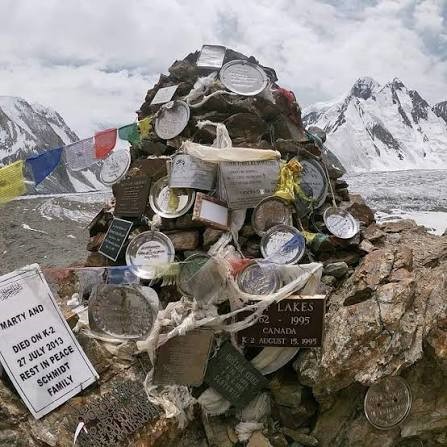
- Visit the Gilkey Memorial, a place of reflection dedicated to climbers lost on K2 and neighboring peaks
- Camp at Urdukas, the only grassy campsite on the entire Baltoro route, with panoramic views of Muztagh Tower and Gasherbrum IV
- Take a scenic mountain flight between Islamabad and Skardu, with aerial views of Nanga Parbat (8,126 m)
- Drive through traditional Balti villages en route to Askole, the last permanent settlement before the wilderness
Trip Overview
Duration: 21 Days / 20 Nights
Region: Baltoro Glacier, Karakoram Range, Gilgit-Baltistan, Northern Pakistan
Route: Islamabad – Skardu – Askole – Baltoro Glacier – Concordia – K2 Base Camp – Baltoro Glacier (return) – Askole – Skardu – Islamabad
Trek Grade: Strenuous, sustained high-altitude glacier trekking over an extended duration, without technical pass crossings
Maximum Altitude: 5,150 m at K2 Base Camp
Best Season: Late June to early September, when the Baltoro Glacier route is in optimal condition
Accommodation: Hotels in Islamabad and Skardu; full-service camping throughout the trek
Group Support: Professional trekking guide, licensed local guide, experienced porters, cook and kitchen staff throughout
This K2 Expedition Pakistan is designed as an all-inclusive journey from arrival in Islamabad until departure, combining hotel comfort in the cities with full-service camping once the trek begins beyond Askole.
Detailed Day-by-Day Itinerary
Day 1: Arrival in Islamabad (540 m)
Islamabad International Airport is the usual starting point for any Karakoram trekking holiday, and this trip is no different. Our representative meets you there and takes you straight to the group hotel. Depending on when you land, you’ll have a bit of free time to rest after the flight or wander the city a little on your own. That evening, we all meet over dinner, you’ll get to know the other trekkers joining the trip, and our staff run through a full briefing covering the route, safety procedures, and what to expect from the altitude ahead.
Day 2: Islamabad to Skardu (2,230 m)
The next morning, weather allowing, you’ll take the flight to Skardu, one of the more memorable short flights anywhere, with Nanga Parbat’s huge face filling the window along with a string of other Karakoram peaks below. Once you land, the afternoon is free, a good chance to wander Skardu, pick up a local SIM card, or grab anything missing from your kit. Skardu sits at 2,230 metres and serves as the capital of Baltistan, built along the Indus River where the Himalaya effectively gives way to the Karakoram. Locals here speak Balti, a language closely related to Tibetan, and the town’s own culture and architecture reflect that connection, which is part of why it’s sometimes called Little Tibet. It’s also worth a bit of self-guided sightseeing if time allows, since Skardu has a character all its own.
If the flight can’t operate, the group drives instead, up the Karakoram Highway toward Chilas, which keeps things on schedule even if the scenery takes a bit longer to reach.
Day 3: Free Day in Skardu (2,230 m)
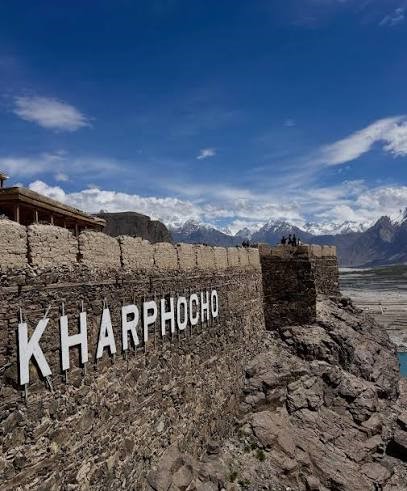
This day is mostly about preparation rather than sightseeing, though there’s still time for both. Our team finalises trekking permits and coordinates with local authorities, while the guide checks over everyone’s mountaineering equipment and runs through the trek plan in more detail. Some people use the free hours to visit Kharpocho Fort or Satpara Lake; others just want to repack their bags properly, since porter weight limits are strict and there’s no shop or phone signal once the trek actually begins. The evening wraps up with a final briefing and confirmation of tomorrow’s jeep departure.
Day 4: Drive from Skardu to Askole (3,050 m)
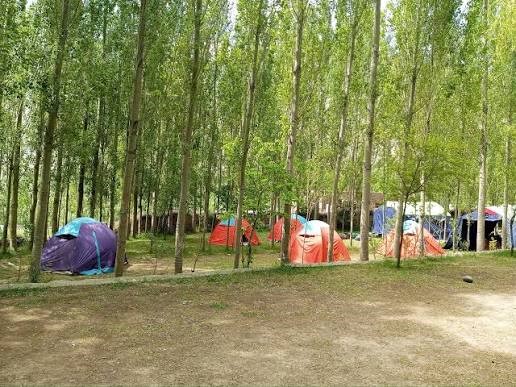
From here, jeeps take over. The drive follows the Shigar River through narrow valleys and past traditional Balti villages before climbing into the Braldu Valley, crossing a few suspension bridges and passing farming communities surrounded by apricot orchards. Askole itself is the last permanent settlement before the mountains properly take over, and it’s here you’ll meet the porters who’ll carry the group’s gear for the rest of the trek. Bags get weighed, everything gets divided up, and camp is set for the first night under the stars.
Day 5: Trek from Askole to Jhola (3,200 m)
The actual trekking begins today. From Askole, the trail follows the Braldu River across wide gravel plains, with Bakhor Das and the granite walls around it dominating the skyline the whole way. A lunch stop at Korofon gives the guide a chance to talk through some of the geology behind this landscape, how the glaciers carved it all out over thousands of years, before the trail continues in the afternoon toward Jhola, crossing a suspension bridge near where the Biafo Glacier runs off. Camp that night sits right beside the Braldu River, and it’s a solid first day, river valley walking, moderate difficulty, nothing too demanding yet.
Day 6: Trek from Jhola to Paiju (3,450 m)
The valley keeps widening as you walk, and the last bits of vegetation, tamarisk, wild rose, the occasional willow, start to thin out. Paiyu Peak, at 6,610 metres, becomes impossible to miss ahead of you, and on a clear day you’ll catch the Trango Group in the distance too. Paiju itself is set among old juniper trees, the last camp where you’ll find natural firewood and fresh bread from the kitchen before the glacier environment starts properly. While everyone rests, the porters spend the afternoon reorganising gear for the crossing ahead, and evenings here often turn into something a bit more festive, with Balti music and dancing around the fire under Paiyu Peak.
Day 7: Trek from Paiju to Khoburtse (3,900 m)
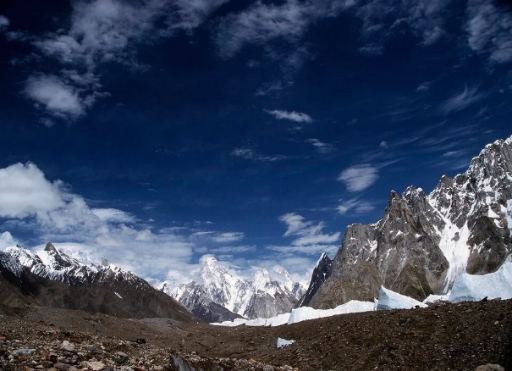
This is the day you actually step onto the Baltoro Glacier, one of the longest glaciers outside the polar regions. The trail climbs over moraine before the ground turns to a mix of rock, gravel, and old ice, uneven enough that trekking poles genuinely help from here on. It’s also one of the most visually dramatic days of the whole trek, with the Trango Towers, Cathedral Peak, and Uli Biaho Tower all rising straight out of the glacier around you. Camp at Khoburtse sits on a rocky terrace above the ice, and the evening light on the surrounding peaks is worth stepping outside the tent for.
Day 8: Trek from Khoburtse to Urdukas (4,050 m)
A shorter day today, which helps with acclimatisation. The route stays on the glacier’s central moraine before climbing up to Urdukas, the only proper grassy campsite anywhere along the Baltoro. From its terrace above the ice, you get uninterrupted views stretching out toward Muztagh Tower, Gasherbrum IV, and part of the Trango massif. Given the comfortable ground and the scenery, Urdukas has a reputation as one of the nicest camps in the entire Karakoram, and the lighter walking day means there’s time to actually sit and enjoy it.
Day 9: Trek from Urdukas to Goro II (4,300 m)
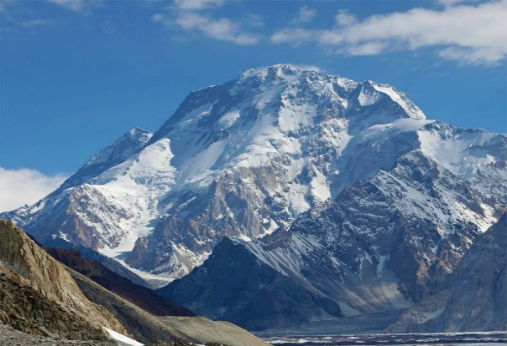
Vegetation disappears completely from here. The trail continues over the upper Baltoro into an increasingly bare, alpine landscape, ice formations, glacial streams, moraine stretching in every direction. Broad Peak and Gasherbrum IV start appearing at a distance, weather permitting, with Masherbrum still visible off to the south. Goro II sits right where the Baltoro meets the Younghusband Glacier, surrounded by mountains on all sides, and it’s genuinely one of the more spectacular high camps you’ll come across anywhere.
Day 10: Trek from Goro II to Concordia (4,650 m)
Today’s walk crosses gently rolling glacier terrain to reach Concordia, often called the heart of the Karakoram, where the Baltoro, Godwin-Austen, Vigne, and upper Baltoro glaciers all come together. K2 appears here for the first time, its unmistakable pyramid shape rising above everything else around it, and it’s genuinely one of those moments that’s hard to describe properly beforehand. From camp, you’re looking at K2, Broad Peak, both Gasherbrums I and II, Mitre Peak, Marble Peak, and Gasherbrum IV, all visible from one spot, which really doesn’t happen anywhere else on earth.
Day 11: K2 Base Camp (5,150 m) and Gilkey Memorial
An early start takes the group along the Godwin-Austen Glacier, past Broad Peak, to reach the actual expedition base camp used by climbers attempting K2. Standing beneath the mountain’s enormous southwest face is something else entirely, and during the climbing season, you’ll often find colourful expedition tents scattered around, with mountaineers from all over the world passing through. A short climb above the glacier leads to the Gilkey Memorial, a cluster of plaques dedicated to climbers who lost their lives on K2 and the peaks nearby, a quiet, reflective stop in an otherwise overwhelming landscape. After some time here, the group heads back down to Concordia for the night.
Days 12–17: The Return Trek
From here, you retrace your steps back along the Baltoro, through Goro II, Urdukas, Khoburtse, Paiju, Jhola, and finally Askole again. It doesn’t feel like walking the same route twice, though. The light hits differently in the afternoons, fresh snow can completely change the texture of the glacier overnight, and moving at a slower, more relaxed pace gives you time to properly take in the scale of everything you rushed past a little on the way up. Reaching Askole again feels like its own small achievement, and most groups mark the occasion with the porters and crew before the drive back to Skardu the next day. Most of your trekking crew and porters actually come from Askole itself, so this is also where you’ll say goodbye to them.
Days 18–21: Skardu, Islamabad, Departure
The jeep ride back to Skardu follows the Indus River once again, and after a night’s rest, you’ll take the mountain-view flight back to Islamabad (with a spare day built in, in case the weather doesn’t cooperate). From there, it’s a transfer to the airport for your onward flight home, bringing this whole expedition to a close.
Inclusions
Pre-Trek Services
- Airport meet and greet and all transfers
- Pre-departure and equipment briefing
- Domestic flight check-in assistance
- Trekking permit formalities and documentation
Accommodation
- Hotels in Islamabad and Skardu (twin-sharing, 3–4 star)
- Full-service camping throughout the trek
- Two-person North Face tents, dining, kitchen, staff, and toilet tents
- Sleeping mattress / foam pad
Transportation
- Islamabad–Skardu domestic flights
- All airport and road transfers
- Private 4×4 jeep, Skardu–Askole (round trip)
- Tolls, fuel, parking, and driver expenses
Meals
- Daily breakfast, lunch, and dinner at hotels
- Three fresh meals daily while trekking, plus tea and snacks
- Packed picnic lunches on trekking days
- Drinking water with meals
Trekking Staff & Logistics
- Licensed English-speaking guide and assistant guides
- Mountain cook, assistant cook, and kitchen helpers
- High-altitude porters (25 kg per trekker)
- Camp setup, dismantling, and all group equipment
Permits, Safety & Documentation
- CKNP entry fee, government permit, and all admin fees
- First aid kit, pulse oximeter, satellite phone, and oxygen if required
- Insurance for all staff and porters
- Trek completion certificate and information pack
Exclusions
- Travel & Visa
- International airfare and taxes outside Pakistan
- Excess baggage and seat selection fees
- Pakistan tourist visa fee
- Mandatory travel, high-altitude, and evacuation insurance
Personal Items & Expenses
- Personal trekking gear (sleeping bag, poles, boots, daypack, etc.)
- Laundry, phone, internet, and battery charging fees
- Alcoholic and soft drinks, personal snacks
- Souvenirs and personal shopping
Holidays GB Tours Pakistan is not responsible for extra costs from weather delays, road closures, landslides, political unrest, or other unforeseen circumstances; related hotel, meal, and transport costs are the participant’s responsibility. Helicopter rescue, evacuation, hospital treatment, and medication costs not covered by insurance are also excluded.