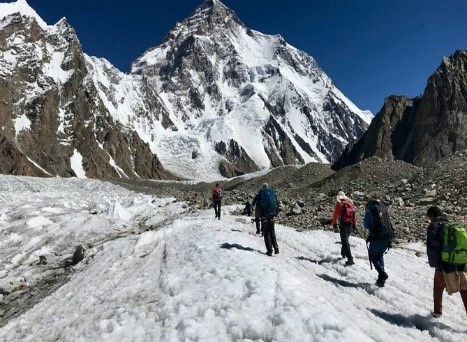
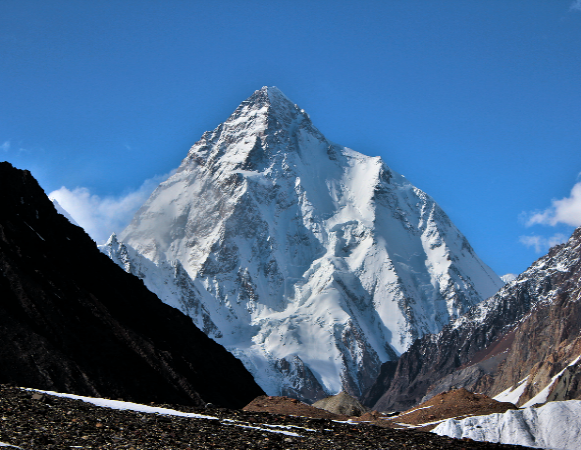
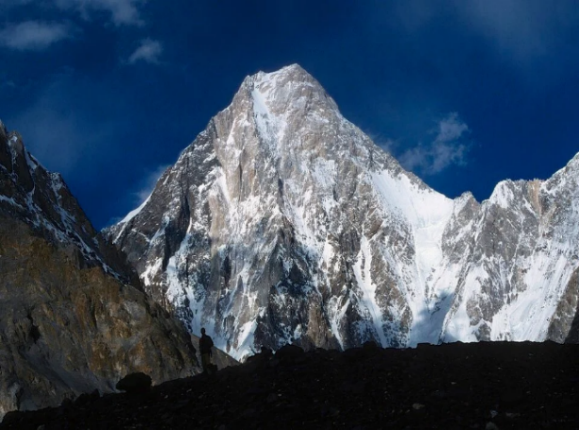
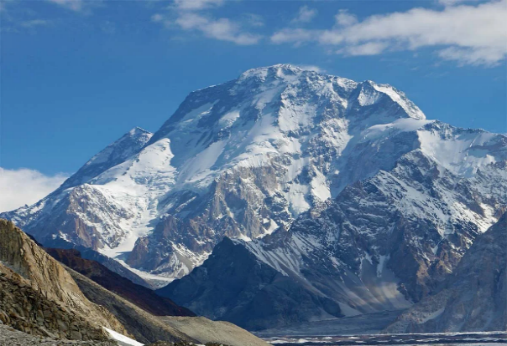
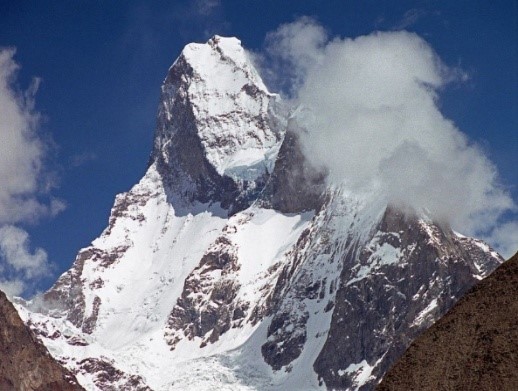
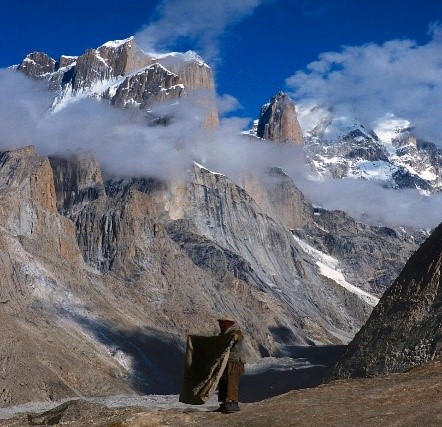
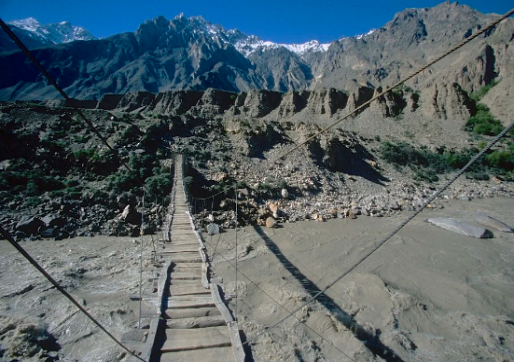
If there’s one trek that sums up everything the Karakoram is capable of, this is probably it. The K2 Gondogoro La Trek is Holidays GB Tours Pakistan’s flagship expedition, an 18-day journey that takes you up the Baltoro Glacier to the base of K2, the world’s second-highest mountain, and then, instead of turning around and walking back the way you came, sends you over a genuine high-altitude mountain pass and down into an entirely different valley on the other side. Few treks anywhere on earth manage to combine that much variety, glacier travel, a technical rope-assisted crossing, and a green, inhabited valley at the end of it, into a single continuous route.
This K2 Gondogoro La Trek Pakistan itinerary follows the Baltoro all the way to Concordia, the spot where four glaciers meet beneath a wall of four separate 8,000-metre peaks, before continuing to K2 Base Camp itself. From there, rather than retracing your steps, the route climbs to Ali Camp and crosses Gondogoro La at 5,585 metres using fixed ropes, descending on the far side into the Hushe Valley, a landscape of meadows, shepherd camps, and centuries-old Balti villages that feels almost like a different country compared to the ice you just spent a week and a half walking across.
We’ve built this as our signature trip for a reason. It’s genuinely demanding, and we won’t pretend otherwise, but it rewards that effort with something a simple out-and-back trek to K2 Base Camp can’t quite match: a full traverse of the Karakoram’s most dramatic terrain, four 8,000-metre peaks in view from a single pass, and a descent that keeps giving you something new to look at right up until you’re back in Skardu.
Why This Journey Is Worth the Effort
The K2 Base Camp and Gondogoro La Trek is regularly ranked among the greatest long-distance treks on the planet, and there’s a simple reason for that: very few routes anywhere put four separate 8,000-metre peaks in view from one single point. A straightforward out-and-back trip to Concordia gives you the Baltoro and K2, which is already extraordinary, but adding Gondogoro La turns the whole thing into a genuine traverse of the Karakoram’s most iconic terrain, glacier on one side, green valley on the other, with a proper mountain pass connecting the two.
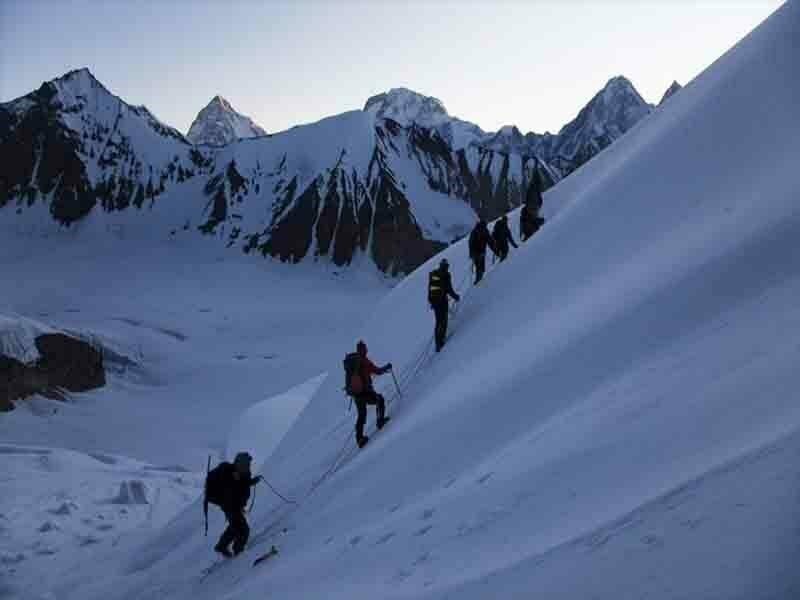
It’s not an easy add-on, though. The pass crossing itself involves several hours of fixed-rope travel on snow and ice, starting in pitch darkness to avoid the afternoon instability that builds up once the sun hits the slopes. But you don’t need prior mountaineering experience to do it. Our guides walk you through the use of crampons, harnesses, and ascenders before the crossing, and the rope-fixing team based in Hushe maintains the route throughout the season specifically so that trekkers, not just professional climbers, can get across safely.
K2 Base Camp and Gondogoro La Trek Cost
| Rate per Person (USD) | Group Size | Tour Leader |
| $2,900 | 4–7 pax | Free |
| $2,700 | 8–10 pax | Free |
| $2,550 | 11–14 pax | Free |
| $2,300 | 15–16 pax | Free |
These rates are per person, twin-sharing, based on a full group of sixteen, and are valid for the 2027 season. They may shift slightly if government taxes, transport costs, or accommodation rates change before your departure.
Baltoro Gondogoro La Trek Package: What to Pack
Temperatures on this route swing dramatically, from as warm as 25°C in the lower Braldu Valley down to -15°C or colder overnight above 5,000 metres, and the Gondogoro La crossing itself demands genuine cold-weather and basic mountaineering preparation on top of standard trekking gear. Because this itinerary combines roughly eleven days of sustained glacier walking with a rope-assisted pass crossing, a full layering system plus some technical equipment isn’t optional.
Base and mid layers: two thermal sets, three or four quick-dry T-shirts, several sets of moisture-wicking underwear, and a lightweight plus a heavier fleece jacket.
Insulation and shells: a high-quality down jacket (800-fill or better), a waterproof Gore-Tex shell, and waterproof over-trousers.
Bottoms, head, and hands: two pairs of trekking pants, a camp pant, waterproof shell pants, a sun hat, a warm beanie, a couple of buffs, and a balaclava, which isn’t really optional for the pass crossing itself, along with liner gloves, warm fleece gloves, and waterproof or insulated mittens suitable for handling rope in freezing conditions.
Feet and accessories: several pairs of trekking socks plus thermal and liner options, well broken-in waterproof boots with room for thick socks, camp shoes, gaiters, glacier-rated UV400 sunglasses or goggles, high-SPF sunscreen, SPF lip balm, and a lightweight towel.
Technical gear for the pass itself: crampons compatible with your trekking boots, two to three locking carabiners, a climbing helmet, collapsible trekking poles with snow baskets, and a headlamp with spare batteries, essential given the 1:00 AM start on crossing day. An ice axe is optional and mainly useful if you already have prior experience with one. Most of this technical gear can be rented in Skardu if you’d rather not bring your own, just confirm what you need at the time of booking.
Rough Packing List for an 18–21 Day Trek
| Item | Qty | Item | Qty |
| Quick-dry T-shirts | 4 | Underwear | 5 |
| Thermal tops | 2 | Trekking socks | 5 |
| Thermal bottoms | 2 | Thermal socks | 3 |
| Trekking pants | 2 | Liner gloves | 1 pr |
| Camp pants | 1 | Warm fleece gloves | 1 pr |
| Waterproof pants | 1 | Waterproof/insulated mittens | 1 pr |
| Fleece jackets | 2 | Sun hat | 1 |
| Down jacket | 1 | Warm beanie | 1 |
| Waterproof jacket | 1 | Buff/neck gaiter | 2 |
| Balaclava | 1 | Climbing helmet | 1 |
| Climbing harness | 1 | Crampons | 1 pr |
| Ascender/jumar | 1 | Locking carabiners | 2–3 |
Temperature Guide Along the Route
| Location | Day | Night |
| Skardu | 20–30°C | 10–18°C |
| Askole | 18–28°C | 8–15°C |
| Paiju | 15–25°C | 5–10°C |
| Urdukas | 10–20°C | 0–5°C |
| Goro II | 5–15°C | -5 to -10°C |
| Concordia | 0–10°C | -8 to -15°C |
| K2 Base Camp | -2 to 8°C | -10 to -15°C |
| Ali Camp | -2 to 6°C | -12 to -18°C |
| Gondogoro La Pass | -5 to 0°C | -15 to -20°C (pre-dawn) |
| Khuspang | 0–10°C | -8 to -12°C |
| Shaicho | 10–20°C | 0–5°C |
| Hushe Village | 15–25°C | 5–12°C |
This range applies to June–August departures and reflects the reality of this trip well: comfortable, even warm, walking in the lower valleys, and genuinely freezing pre-dawn conditions on the pass itself. The Gondogoro crossing typically begins around 1:00 AM, right when temperatures at altitude hit their lowest point of the entire trek, so a properly tested layering system and a reliable headlamp aren’t things to skip on this one.
Frequently Asked Questions
Do I need mountaineering experience for this trek?
No technical climbing background is required. Our guides walk you through crampons, harnesses, and ascenders before the Gondogoro La crossing, and the fixed ropes maintained by the Hushe rescue team are specifically there to make the pass safe for trekkers rather than only experienced mountaineers.
How does this differ from the standard K2 Base Camp Trek?
The standard trek retraces its steps back through the Baltoro. This itinerary instead continues over Gondogoro La and descends into the Hushe Valley, adding a technical pass crossing but avoiding a repeat of the same glacier route on the way out.
When is Gondogoro La actually open?
The rope-fixing team from Hushe typically sets up in mid-June and removes the ropes by late August or early September, which is why this trek only runs within that same late June to early September window.
How fit do I need to be?
You should be comfortable walking 6 to 10 hours a day on uneven terrain for well over a week, with good aerobic fitness being far more important than any prior high-altitude experience.
What happens if I can’t continue partway through?
Our team will accompany you back to Skardu safely if you’re unable to continue, and you can either wait there for the rest of the group or arrange an earlier flight home.
Is a specific visa required for this trek?
Yes, since the Baltoro region falls within the Central Karakoram National Park, a restricted zone, you’ll need a trekking and mountaineering visa rather than a standard tourist visa. We provide the documentation needed to apply, including the letter of invitation.
What’s the single biggest extra cost to budget for?
Beyond the quoted package price, mandatory high-altitude and evacuation insurance tends to be the cost people underestimate most, it’s not included, but it’s genuinely non-negotiable given the remoteness of this route.
Trek Highlights
- Fly from Islamabad to Skardu on one of the most scenic short flights in the world, with Nanga Parbat filling the window
- Trek the full length of the Baltoro Glacier, one of the longest glaciers outside the polar regions
- Stand at Concordia, the meeting point of the Baltoro, Godwin-Austen, and Vigne glaciers, surrounded by four of the world’s fourteen 8,000-metre peaks
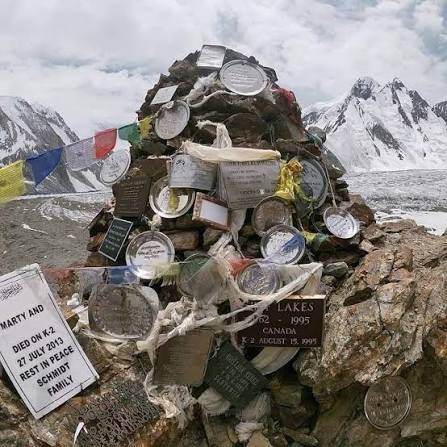
- Reach K2 Base Camp at 5,150 m and visit the Gilkey Memorial, a tribute to climbers lost on the mountain
- Cross the technical, rope-assisted Gondogoro La pass at 5,585 m, the highest point of the entire trip
- Take in a single view that includes K2, Broad Peak, Gasherbrum I, and Gasherbrum II all at once from the top of the pass
- Descend through the alpine meadows, wildflowers, and shepherd camps of the Hushe Valley
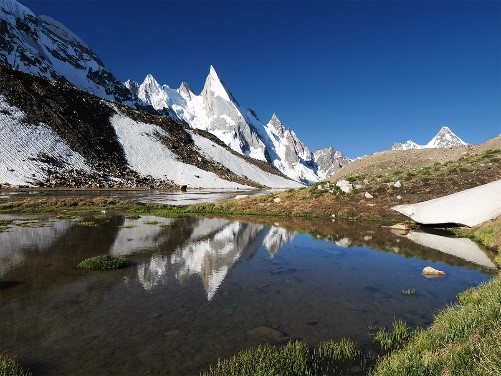
- Visit Hushe Village, the launch point for expeditions to Masherbrum, K6, K7, and Laila Peak
- Pass through Khaplu, home to a centuries-old fort and one of Baltistan’s most historically significant towns
Trip Overview
Duration: 18 Days / 17 Nights
Region: Baltoro Glacier, Karakoram Range, Gilgit-Baltistan
Route: Islamabad → Skardu → Askole → Baltoro Glacier → Concordia → K2 Base Camp → Gondogoro La → Hushe Valley → Skardu → Islamabad
Grade: Strenuous, extended high-altitude glacier trekking plus a technical, rope-assisted pass crossing
High Points: 5,585 m at Gondogoro La; 5,150 m at K2 Base Camp
Best Season: Late June through early September, when the Gondogoro rope-fixing team is active and the pass is generally passable
Accommodation: Hotels in Islamabad and Skardu, full camping through the trek, a guest house at Hushe Village
Support Crew: A professional trekking guide, licensed local guide, experienced high-altitude porters, and a cook and kitchen team throughout
Every June, a rescue team based in Hushe village heads up to fix ropes across the steepest sections of Gondogoro La, maintaining them through the season and pulling them back down once the weather turns in early autumn. That’s part of why the timing on this trek matters so much, cross too early or too late and the ropes simply aren’t there yet, or have already come down for the winter.
Day-by-Day Itinerary
Day 1: Arrival in Islamabad (540 m)
Stay: Hotel | Meals: Dinner
Your journey starts the moment you land. Someone from the Holidays GB Tours team will be waiting at Islamabad International Airport to take you to your hotel, no need to figure out taxis or directions after a long international flight. If you land with daylight to spare, it’s worth stepping out to a nearby café or market just to shake off the travel fatigue before the trip properly kicks in. That evening, everyone gathers for dinner, and it’s here that the trekking guide walks the whole group through what’s actually ahead: the route, weather patterns you might encounter, how altitude affects the body, and a rundown of the equipment everyone’s brought. It’s also simply the first chance to meet the people you’ll be spending the next two and a half weeks with, which matters more than it sounds like it would.
Day 2: Fly to Skardu (2,230 m)
Flight: ~1 hour | Stay: Hotel | Meals: Breakfast
After a quick breakfast, it’s back to the airport for the flight north, and this is genuinely one of those experiences that lives up to the hype. On a clear day, the aircraft passes close enough to Nanga Parbat, all 8,126 metres of it, that you can make out individual ridgelines and glaciers on its face, with the wider Karakoram unfolding beneath you for the rest of the flight. Landing in Skardu puts you at 2,230 metres, noticeably higher and cooler than Islamabad, and the rest of the day is left open. Some people head straight to bed to recover from the early start; others wander Skardu Bazaar or make the climb up to Kharpocho Fort, which looks straight down over the Indus River and the town spread out below it. Worth knowing: if the weather doesn’t cooperate and the flight gets cancelled, the backup plan is a drive along the Karakoram Highway toward Chilas instead, which keeps things moving without derailing the schedule entirely.
Day 3: Free Day in Skardu (2,230 m)
Stay: Hotel | Meals: Breakfast
Nothing thrilling happens on paper today, but it’s one of the more important days of the whole trip. While the team handles trekking permits and squares away logistics with local authorities, and the guide pays a visit to the Tourism Department for a formal briefing, everyone else gets a proper window to sort their gear out. This is the point where duffel bags get handed out, porter weight limits get explained in detail, and any last-minute shopping needs to happen, because once you leave Skardu, there’s no store, no pharmacy, and no phone signal until you’re well past Askole. A few people spend the free hours at Satpara Lake or back at the fort; most just double- and triple-check their packing. The day wraps with one more briefing that evening, confirming the jeep departure time for the morning.
Day 4: Drive from Skardu to Askole (3,050 m)
Driving Time: 6–7 hrs | Stay: Camp | Meals: Full board
This is the day the road trip really begins. Jeeps take the group along the Shigar River, through tight valleys and past small Balti villages, before climbing into the Braldu Valley proper. The route crosses a handful of suspension bridges and skirts farming communities ringed by apricot orchards, and with every kilometre, the surroundings get a little wilder and less inhabited. Askole itself is the last permanent village anyone lives in before the true wilderness starts, and it’s here that the porters who’ll carry gear for the rest of the trek join the group. Duffel bags get weighed and split up according to the weight limits explained back in Skardu, and camp gets set up for a first night spent properly under the stars.
Day 5: Trek from Askole to Jhola (3,200 m)
Distance: ~20 km | Walking: 6–7 hrs | Gain: 150 m
The trekking finally starts here, on foot, no more jeeps. Leaving Askole, the trail runs along broad gravel flats beside the Braldu River, with Bakhor Das Peak and its granite walls towering overhead the entire way. A lunch stop at Korofon gives the guide a natural opening to explain some of the glacial geology behind this landscape, how ice has carved and reshaped these valleys over thousands of years, before the afternoon leg crosses a suspension bridge near the point where the Biafo Glacier drains out. Camp for the night sits beside the Braldu River, a fitting, easy introduction: river valley terrain, moderate difficulty, nothing technical required yet.
Day 6: Trek from Jhola to Paiju (3,450 m)
Distance: 19 km | Walking: 6–7 hrs | Gain: 250 m
The valley keeps widening, and the vegetation starts thinning out, tamarisk, wild rose, and the last scattered willows before the landscape turns properly alpine. Paiyu Peak, at 6,610 metres, becomes a constant, unmissable presence ahead, and on clear days you’ll spot the distant granite walls of the Trango Group too. Paiju Camp itself sits among old juniper groves on a sandy plateau, the final stop where natural firewood is available and the kitchen can still bake fresh bread before the glacier environment takes over completely. While everyone rests, porters spend the afternoon repacking gear for the crossing ahead, and evenings here have a reputation for turning into something a little festive, often with local Balti music and dancing around the campfire as the sun sets behind Paiyu Peak.
Day 7: Trek from Paiju to Khoburtse (3,900 m)
Distance: 16 km | Walking: 6–7 hrs | Gain: 450 m
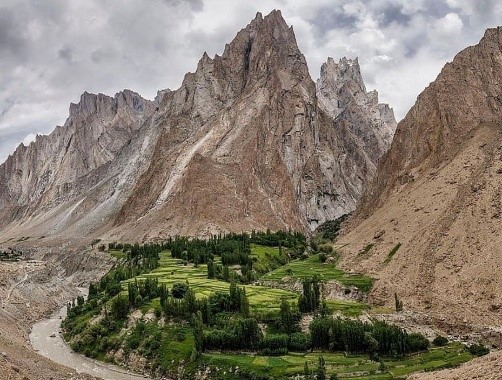
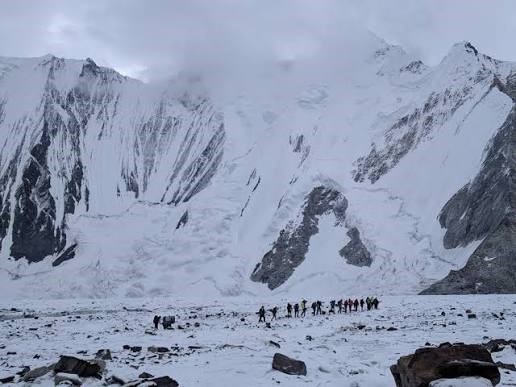
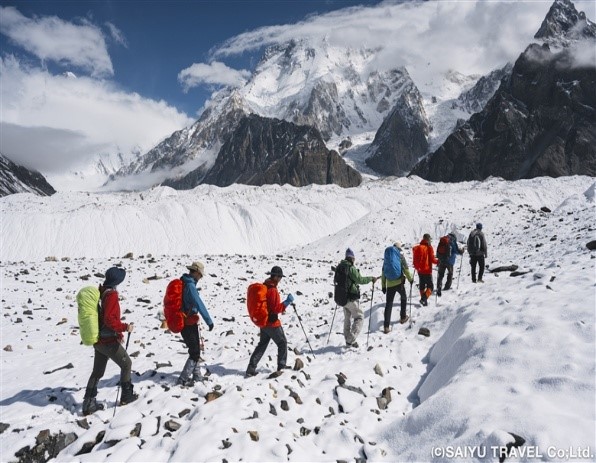
Today marks the actual start of walking on the Baltoro Glacier itself, one of the longest glaciers outside the polar regions. The trail climbs over moraine before the ground turns to a shifting combination of rock, gravel, and ancient ice, uneven enough that trekking poles stop being a nice-to-have and start being genuinely useful. It’s also one of the more visually striking days of the entire trip, with massive granite formations, the Trango Towers, Cathedral Peak, Uli Biaho Tower, rising directly out of the glacier around you, Paiju Peak still visible behind. Camp at Khoburtse sits on a rocky terrace overlooking the ice, and the way the evening light shifts across the surrounding peaks, gold fading into orange and then deep purple, is worth staying outside your tent for.
Day 8: Trek from Khoburtse to Urdukas (4,050 m)
Distance: 10 km | Walking: 5–6 hrs | Gain: 150 m
A deliberately shorter day, built in to let bodies adjust to the altitude gradually. The trail follows the glacier’s central moraine before climbing up to Urdukas, the only genuinely grassy campsite anywhere along the entire Baltoro route. Perched on a natural terrace above the ice, it offers arguably the best viewpoint of the whole trek so far, uninterrupted sightlines across the glacier toward Muztagh Tower, Gasherbrum IV, and part of the Trango massif. Between the comfortable ground underfoot and the scenery on offer, it’s easy to see why Urdukas has such a strong reputation among people who’ve done this trek before.
Day 9: Trek from Urdukas to Goro II (4,300 m)
Distance: 12 km | Walking: 6–7 hrs | Gain: 250 m
Vegetation disappears entirely from here on. The trail continues over the upper Baltoro into a landscape that feels genuinely remote, ice formations, glacial streams, and endless moraine in every direction, with barely a green thing in sight. As the day goes on, some of the Karakoram’s biggest peaks start showing themselves at a distance, weather depending, with Broad Peak and Gasherbrum IV appearing for the first time and Masherbrum still visible off to the south. Goro II Camp sits right at the point where the Baltoro meets the Younghusband Glacier, mountains pressing in from every direction, one of the more dramatic high camps you’ll find anywhere on this route.
Day 10: Trek from Goro II to Concordia (4,650 m)
Distance: 12 km | Walking: 5–6 hrs | Gain: 350 m
Today’s walk crosses gently undulating glacier terrain to reach Concordia, often called the Throne Room of the Mountain Gods, where the Baltoro, Godwin-Austen, Vigne, and upper Baltoro glaciers all converge in one place. K2 makes its first appearance here, its unmistakable pyramid shape rising above everything else around it, and it’s genuinely one of those moments that photographs never quite do justice to. From camp, the view takes in K2, Broad Peak, both Gasherbrum I and II, Mitre Peak, Marble Peak, and Gasherbrum IV, all visible at once, a concentration of major peaks that simply doesn’t exist anywhere else on the planet.
Day 11: K2 Base Camp (5,150 m) and Gilkey Memorial
Distance: 22 km round trip | Walking: 8–10 hrs | High point: 5,150 m
An early start takes the group along the Godwin-Austen Glacier, past Broad Peak, to reach the actual campsite used by expeditions attempting K2. Standing beneath the mountain’s massive southwest face is something that’s hard to describe properly beforehand, and during the climbing season, you’ll often find the base camp scattered with colourful expedition tents, giving you the chance to cross paths with mountaineers from all over the world. A short climb above the glacier leads up to the Gilkey Memorial, a cluster of plaques dedicated to climbers who died attempting K2 and its neighbouring peaks, a quiet, sobering stop in an otherwise overwhelming landscape. After time spent at both, the group heads back to Concordia for the night.
Day 12: Concordia to Ali Camp (4,950 m)
Distance: 11 km | Walking: 5–6 hrs | Gain: 300 m
Leaving Concordia’s natural amphitheater behind, the trail follows the Vigne Glacier, giving one last set of close-up views of K2, Broad Peak, and the Gasherbrums before the terrain shifts toward Ali Camp, sitting directly below Gondogoro La. The walking mixes glacier ice, rocky moraine, and patches of snow. Once camp is set up and lunch is done, the guide runs through a proper safety briefing, covering crampons, harnesses, helmets, ascenders, carabiners, and how the fixed ropes actually work, checking everyone’s climbing gear in the process. Dinner comes early, and so does bedtime, since tomorrow starts in the middle of the night.
Day 13: Ali Camp, Over Gondogoro La (5,585 m), to Khuspang (4,650 m)
Distance: 14 km | Walking: 10–12 hrs | High point: 5,585 m
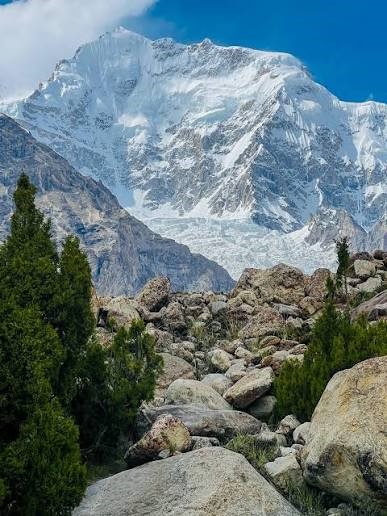
Wake-up is around 1:00 AM, tea and a light breakfast before setting out into the dark under a sky full of stars. The climb starts gradually across the glacier toward the base of the pass, and as the terrain steepens, fixed ropes take over to get everyone safely across the steeper snow and ice sections. Reaching the top of Gondogoro La just after sunrise delivers one of the best mountain views anywhere on earth: K2, Broad Peak, Gasherbrum I through IV, Chogolisa, Mitre Peak, Masherbrum, Laila Peak, K6, K7, the Trinity Peaks, Baltoro Kangri, and the Baltoro Glacier stretching out below, all visible at once. After enough time to take photos and let it sink in, the descent on the far side, also on fixed ropes, continues across the Gondogoro Glacier down to Khuspang Camp.
Day 14: Khuspang to Shaicho (3,350 m)
Distance: 16 km | Walking: 6–7 hrs | Loss: 1,300 m
The descent continues along the Gondogoro Glacier before the ice finally gives way to the Hushe Valley, and the change is dramatic. Bare rock and glacier turn into green alpine meadows, wildflowers, and clear-running streams within a matter of hours. Masherbrum, Laila Peak, K6, K7, and Namika Peak stay visible for much of the walk, and it’s common to spot shepherds out with their yaks and livestock in the high summer pastures. Camp at Shaicho sits right beside the Hushe River, a peaceful end to a genuinely long descent.
Day 15: Shaicho to Hushe Village (3,050 m)
Distance: 14 km | Walking: 5–6 hrs | Loss: 300 m
An easier day, following a clear trail beside the Hushe River through green fields, willow trees, poplar groves, and traditional Balti villages, a real contrast after so many days of ice and rock. Hushe Village itself has a serious reputation in mountaineering circles as the launch point for expeditions to Masherbrum, K6, K7, and Laila Peak, and it’s a good place to meet locals and experience the region’s well-known hospitality firsthand. The night is spent in a proper guest house rather than a tent, and it’s the natural moment to celebrate finishing the trek with your guides and porters, many of whom actually call this village home.
Day 16: Hushe to Skardu (2,230 m)
Distance: 145 km | Driving: 5–6 hrs
Jeeps take over again for the drive through the Hushe and Shyok Valleys, following the Shyok River past Balti villages, irrigated fields, and the historic town of Khaplu, known for its centuries-old fort and deep cultural history. From there, the road continues through the Indus Valley into Skardu, the capital of Baltistan, where a hot shower and a real bed await after nearly two weeks in a tent.
Day 17: Skardu to Islamabad
A transfer to Skardu Airport for the flight south, weather permitting. If the flight can’t operate, an overland drive via the Karakoram Highway is available as a backup, though it does add an extra day to the trip.
Day 18: Departure from Islamabad
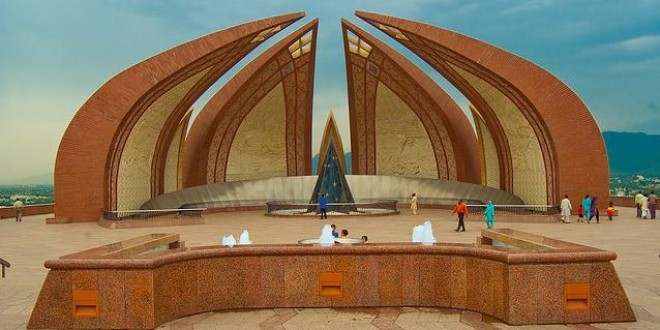
With the morning free, most groups take the chance to visit the Faisal Mosque and the Pakistan Monument, two of Islamabad’s most recognisable landmarks, before a farewell dinner in the evening and a final transfer to the airport for the flight home.
Inclusions
- Before you head into the mountains: airport pickup and every transfer throughout the trip, a pre-departure briefing from our expedition leader, an equipment check and final trek briefing, help with domestic flight check-in, and all the paperwork for your trekking permits.
- Where you’ll sleep: twin-sharing hotels in Islamabad and Skardu (3–4 star), full camping support for the entire trek, spacious two-person North Face tents, a proper dining tent with tables and chairs, a kitchen tent, staff tents, a toilet tent, and a sleeping mattress or foam pad.
- Getting around: the Islamabad–Skardu domestic flight, subject to weather, all airport and road transfers, and a private 4×4 jeep for the Skardu-Askole-Hushe legs, including all tolls, fuel, and driver costs.
- Food: breakfast, lunch, and dinner at hotels; three fresh meals a day on the trail plus morning tea, afternoon snacks, and packed lunches on trekking days; fresh fruit where available; and drinking water throughout.
- Your crew: a government-licensed, English-speaking guide, local assistant guides depending on group size, a mountain cook, assistant cook, and kitchen helpers, and experienced high-altitude porters carrying up to 25 kg per trekker, with camp setup and teardown fully handled.
- Permits and paperwork: the Central Karakoram National Park entry fee, a visa invitation letter, government trekking permits, environmental and local administration fees, campsite fees, the Gondogoro rescue fee that funds the rope-fixing team, all bridge crossing fees, and insurance for porters, guides, and cooks.
- Safety gear: a comprehensive first aid kit, emergency oxygen if required, a pulse oximeter, a satellite phone for emergencies, and regular weather updates whenever available.
- At the end: a trek completion certificate and an information pack with a trek map.
Exclusions
- International airfare, taxes outside Pakistan, excess baggage fees, and seat selection all sit outside the package. So does your Pakistan tourist visa, mandatory travel insurance, high-altitude trekking insurance, and emergency evacuation coverage.
- Meals during unplanned delays, alcohol, soft drinks, and personal snacks aren’t included either, along with laundry, phone and internet charges, battery charging fees, toilet fees at some campsites, souvenirs, and personal shopping.
- Your personal trekking gear, sleeping bag, poles, boots, backpack, headlamp, water bottles, and personal clothing, is also on you, though most of this can be rented in Skardu if you’d rather not travel with it.
- Extra costs from weather delays, road closures, landslides, or political disruption aren’t covered by the package price, any related hotel, meal, or transport costs become your responsibility. Helicopter rescue, hospital treatment, and medication not already covered by your insurance policy are excluded as well.
Tips and Optional Extras
Tips aren’t built into the price but are genuinely appreciated by your guide, assistant guides, cooks, kitchen staff, porters, and jeep drivers, entirely at your discretion.
If you want anything extra, a single hotel room or tent, a personal porter for your daypack, gear rental, extra sightseeing, or additional hotel nights before or after the trek, we can arrange it.